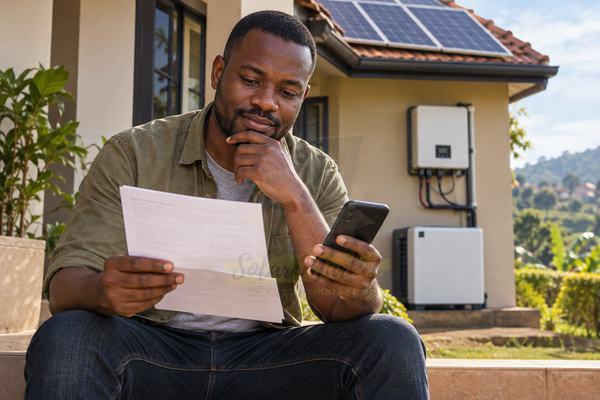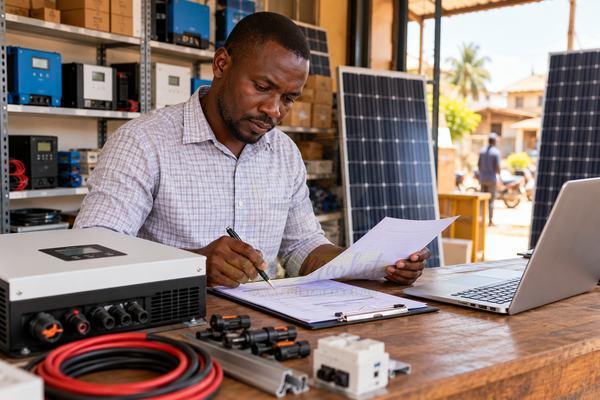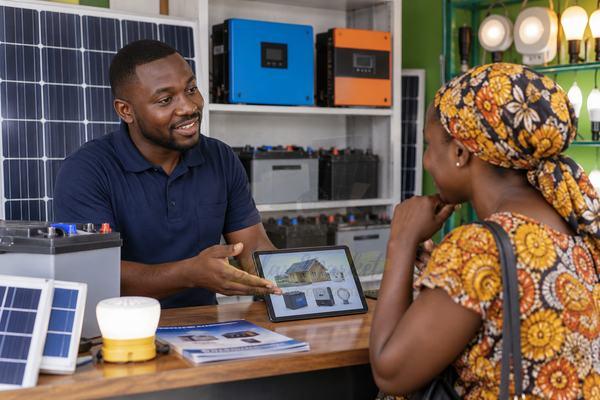
In Uganda's fast-growing solar market, not every product on the shelf is what it claims to be. Counterfeit inverters, rebranded batteries, and unofficial grey-market imports circulate alongside genuine stock — and buyers often cannot tell the difference until a product fails. SolarMarket's Brand Ownership programme is our structured answer to this problem. Here is what it is, why it exists, and what it means for you — whether you are a buyer, a brand, or a seller.
The Counterfeit Problem in Uganda's Solar Market
Uganda's solar sector has grown rapidly — and that growth has attracted bad actors. The patterns we see repeatedly:
- Inverters sold as "original" but assembled from sub-standard components under a brand name purchased cheaply from an overseas OEM.
- Batteries labelled 200Ah that deliver 120Ah under real load — the capacity is stamped on the casing but never tested to the specification.
- Grey-market imports where a seller buys excess stock from a third country without any brand relationship, then undercuts authorised dealers on price while offering no warranty support.
- Counterfeit documentation — fake authorization letters and purchase invoices presented to gain buyer trust on informal platforms.
A buyer who purchases a counterfeit product loses their money, their system underperforms or fails, and no warranty is honoured because no authorised dealer sold it to them. The brand suffers reputational damage for products it never made or sanctioned. And legitimate authorised dealers lose business to cut-price operators selling inferior goods under the same name.
"A buyer came to us after purchasing a '200Ah battery' from a market stall. It ran dry in three months. The label said a brand we recognize — but no authorized dealer in Uganda had ever imported that model. The serial number was not in any manufacturer database."
What SolarMarket Is Doing About It
SolarMarket operates a three-layer brand trust system:
Layer 1 — Shop Verification
Every seller on SolarMarket must upload their trading license before their shop goes live. Admin verifies the legal business name against the uploaded document. Unverified shops cannot publish offers. This baseline prevents anonymous listings and holds every seller accountable to a real, registered business identity in Uganda.
Layer 2 — Brand Authorization
Verified sellers who stock specific brands can submit brand authorization credentials — a purchase invoice from an authorized distributor, or a letter of authorization from the brand or their regional representative. Admin reviews these. Sellers who pass get a brand authorization indicator on their relevant offers. Buyers can see, on any offer, whether the seller has documented their supply chain for that brand.
Layer 3 — Brand Ownership
The deepest layer is Brand Ownership — a formal recognition for exclusive distributors, official resellers under dealer agreements, and manufacturers. Approved Brand Owners gain a Brand Owner Dashboard that shows them every seller listing their brand's products on SolarMarket, every authorization request coming in from other dealers, and live brand performance data. They can approve legitimate resellers and flag suspicious ones. This means the brand's authorised commercial network actively self-polices on the marketplace.
The goal: every offer on SolarMarket for a major brand should trace back to an authorised supply chain — documented, reviewable, and transparent to any buyer.
We are not there yet. Brand Ownership is the structure that makes it possible to get there, brand by brand, over time.
For Buyers: How Brand Ownership Protects You
When you see a brand authorization indicator on a seller's offer, it means the seller submitted documentation proving their supply chain for that brand, their shop is verified against a real registered business in Uganda, and — if the brand has an active Brand Owner on SolarMarket — the official distributor has reviewed and approved that seller's credentials.
This does not guarantee every product is perfect. It means the supply chain is documented and the seller is accountable. If a dispute arises, SolarMarket has their business identity, trading license, and brand authorization records on file.
What to look for when buying
- Check whether the seller's shop shows as Verified. Unverified shops have not passed the trading license check.
- For major brands (Felicity, DEYE, Growatt, Victron, etc.), look for the brand authorization indicator on the offer — it means the seller's brand credentials were reviewed by admin.
- When buying through an RFQ (Request for Quotation), sellers who respond with brand authorization on file are safer choices than anonymous sellers with no documented supply chain.
- If you are unsure, ask the seller directly for the model's serial number range and warranty terms. Authorised sellers know these. Grey-market operators typically do not.
A price significantly below every other offer for the same product is a red flag, not a deal. Authorised dealers pay import duties, VAT, and distribution costs. A price well below the market floor often means unregistered imports, substituted components, or a product that is not what it claims to be.
For Brand Owners: Why You Should Register on SolarMarket
If your brand sells solar equipment in Uganda and you have a distribution network here, SolarMarket's Brand Ownership programme gives you something you cannot get from WhatsApp groups or distributor spreadsheets: a live, searchable view of your brand's market presence in Uganda.
Protect your distribution network
Without Brand Ownership on a platform, any seller can list your products — with or without your sanction. You have no visibility into who is claiming to sell your brand, at what prices, with what product descriptions, or with what after-sales promises they are making to buyers.
With Brand Ownership, every seller on SolarMarket listing your products must submit credentials that route to your review queue. You see who is in the network, where they operate, and what prices are being offered. You can grow the network deliberately — approving strong regional resellers in under-served areas — or protect it by declining sellers you have not authorised.
Real-time market data for Uganda
The Brand Owner Dashboard shows your brand's live performance: how many buyers are searching for your products, which models are generating the most RFQs, what price range your offers trade at across the market, and which regions have active authorized sellers and which are uncovered. This is primary market intelligence from actual buyer behaviour — not estimates or survey data.
A Chinese inverter manufacturer's exclusive Uganda distributor applies for Brand Ownership. After approval, the dashboard shows 4 authorized sellers in Kampala, 1 in Mbarara, and zero in Northern Uganda — but searches for their 5kW model in Gulu have grown 40% over three months. The distributor recruits a northern Uganda reseller, who submits their authorization request through SolarMarket. Three months later, Gulu shows up in the regional breakdown with 1 authorized seller and 12 completed RFQs.
Counterfeit detection through anomaly spotting
If a seller appears with prices significantly below what an authorised importer could offer — or with product descriptions that do not match your actual models — Brand Ownership gives you the mechanism to flag it. The combination of price-anomaly data and seller identity (all sellers are verified against real business documents) makes it much harder for counterfeit operators to persist without detection.
How to register as a Brand Owner
Your Uganda exclusive distributor or authorised regional representative applies through their seller account on SolarMarket. The application requires an authorization letter or distributor agreement. Once approved, the Brand Owner Dashboard is activated. If your brand is not yet in the SolarMarket catalogue, it is created as part of the approval.
Read the full how-to guide for the Brand Ownership application →
For Sellers: Why Brand Authorization Differentiates You
Buyers in Uganda's solar market are becoming more sophisticated. When a buyer is comparing two offers for the same 5kW hybrid inverter at similar prices, the deciding factor is increasingly trust — and trust, on SolarMarket, is documented.
What the authorization badge signals to buyers
An authorized seller badge on your offer tells a buyer three things: your shop passed the trading license check, you submitted brand credentials that were reviewed and passed, and — if the brand has an active Brand Owner — the official distributor has approved your credentials. That is a stronger trust signal than a low price alone.
How to get authorized for the brands you stock
From your seller dashboard, go to Shop > Brand Authorizations or complete Step 4 of your onboarding checklist. Submit a purchase invoice from an authorized distributor or an authorization letter for each brand you carry. Once reviewed by admin, the authorization appears on your relevant offers.
Do not submit invoices from informal market sources, fabricated authorization letters, or documents naming a different company than your registered legal business name. Admin verifies documents against your shop registration. Misrepresentation results in authorization rejection and may trigger a shop suspension review.
If you are a major distributor: apply for Brand Ownership
If you hold an exclusive distributorship or a formal dealer agreement, go beyond basic authorization and apply for Brand Ownership. This unlocks the Brand Owner Dashboard — brand performance data, reseller network oversight, and the ability to review authorization requests from other sellers. It positions your business as the authoritative point of contact for that brand on the marketplace.
The Bigger Picture
Brand Ownership is part of a broader SolarMarket commitment: the marketplace should make it easier, not harder, to buy genuine solar equipment from documented sellers in Uganda. Every layer — shop verification, brand authorization, Brand Ownership — adds a checkpoint that genuine operators pass easily and that counterfeit or grey-market operators struggle to fake.
This matters beyond individual transactions. Uganda's solar sector benefits when buyers trust what they purchase, when warranties are honoured, and when investment in solar — by households, businesses, and institutions — delivers the returns that good equipment can actually provide. A market full of counterfeit products undermines all of that. A market with documented supply chains, verified sellers, and accountable brand owners can build and sustain that trust.
We are building that market, one verified seller and one authorised brand at a time.
Take Action
- Buyers: Submit an RFQ to get quotes from verified sellers for any solar product.
- Sellers: Complete your seller onboarding to get brand authorization on the brands you carry.
- Distributors and brand owners: Apply for Brand Ownership to activate distributor network oversight on SolarMarket.